Key Takeaways
- The right lever hoist should fit the type of work, the load, and the working environment.
- Before buying, check how much weight the hoist needs to handle and how far the load needs to move.
- Make sure the hoist is easy to operate and suitable for the available working space.
- Check the product quality, safety requirements, documents, and supplier capability.
Introduction
Choosing the right lever hoist involves more than checking the rated capacity. Buyers should also consider the application, load direction, working space, lift height, and frequency of use.
For industrial buyers, the choice of supplier also matters because product quality, documentation, and after-sales support can affect the purchasing process.
How Should You Match a Lever Hoist to the Application?
The application should be defined first because it determines the load requirements, working direction, and suitable product configuration.
Choose Between Lifting, Pulling, and Tensioning
The first step is to identify how the lever hoist will be used. In simple terms, lifting means raising a load, pulling means moving a load horizontally or in another direction, while tensioning means keeping a load, cable, or other item under controlled pulling force.
When the hoist is used for lifting, buyers should focus on the load weight and required lift height. If manual operation is needed without a power source, a manual lever chain hoist, which is a hand-operated hoist with a chain, can be considered.
Pulling a load may require a different amount of force from simply lifting its weight. Friction, slope, ground conditions, and the direction of movement can all affect how much force is needed.
Tensioning is different because the main purpose is to apply or maintain a controlled pulling force. Buyers should confirm that the selected lever chain hoist can handle this type of work.
Determine the Required Load Capacity and Pulling Force
The required capacity should be based on the actual load and working conditions, rather than the heaviest item that may be handled in the future.
The selected hoist should not be loaded beyond its rated capacity. U.S. Occupational Safety and Health Administration (OSHA) requirements for applicable lifting devices also include clear capacity marking and limits on rated loads. The point used to attach the hoist should also be strong enough to support the load.
Check Lift Height, Chain Length, and Working Space
The available working space should be checked before determining the required chain length and product size.
Lift height determines how much chain is needed for the intended movement. A longer chain is useful when the distance between the hoist and the load is greater, while a shorter chain is more suitable when the working distance is limited. The chain should be long enough for the required movement without creating unnecessary excess.
Working space matters because the hoist needs enough room for installation and handle operation. In a confined area, limited space may make the hoist difficult to install or operate. Before ordering, measure the space around the support point and load to make sure there is enough room to use the lever hoist properly.
Which Specifications Should You Check Before Buying?
After confirming the application, buyers should review the load chain, brake, hooks, and operating method to determine whether the lever hoist is suitable for the intended work.
Check the Load Chain
The load chain is a key load-bearing component of a lever chain hoist, so its grade, material, length, and compatibility with the complete hoist should be checked carefully.
Buyers should confirm that the chain can handle the expected load and working conditions. The chain length should also be sufficient for the required lifting or pulling distance, while the chain material and finish should suit the working environment.
The chain should not be evaluated separately from the hoist. The load chain, hoist body, hooks, and rated capacity should be considered as one complete product.
Check the Brake and Hooks
The brake and hooks are important for controlling the load and connecting the hoist to the load. Buyers should check both when selecting a lever hoist.
For example, a ratchet lever hoist is a type of lever hoist. When the handle is operated, the ratchet mechanism helps control the movement of the load, allowing it to move step by step with the handle. Buyers should check the brake design and product specifications to understand how the hoist holds and controls the load during lifting or pulling.
The hooks should be strong enough for the expected load and suitable for the way the hoist is connected. If the hooks are not strong enough or the connection is not suitable, the load may not be held securely. Buyers should therefore check the hook design and the product information provided by the manufacturer before ordering.
Consider Handle Effort and Portability
For a manual lever chain hoist, ease of operation is an important part of practical usability.
The effort required to operate the handle affects how easily the operator can control the load, especially during frequent use. Portability also matters because a lever hoist may need to be moved between different work areas during maintenance, installation, or workshop operations.
For this reason, buyers should not compare products based only on rated capacity. Handle operation, portability, and the available working space should also be considered before making a final decision.
What Standards and Documents Should You Confirm?
Applicable standards and product documents help buyers determine whether a lever hoist is suitable for the target market and intended application.
Confirm the Applicable Standard
The applicable requirements should first be confirmed based on the target market and intended use.
For a lever chain hoist, buyers should confirm whether the product meets the relevant standards required in the target market. The applicable standards and supporting documents should be discussed with the supplier before placing an order.
Ask for Product and Inspection Documents
Product documents should support the specifications included in the quotation.
Depending on the order and target market, buyers may request product specifications, inspection records, test documents, certificates, and other required quality documents.
The key point is consistency. The delivered product should match the specifications and documentation agreed during the purchasing process.
Check Replacement Parts and After-Sales Support
Spare parts and after-sales arrangements should be confirmed before purchasing to avoid maintenance problems after delivery.
Ask whether the supplier can provide replacement parts and how technical questions or product issues will be handled after delivery. This is particularly important for buyers who expect to use the product over a long period.
How Should You Evaluate a Lever Hoist Supplier?
Supplier selection should focus on whether the supplier can provide consistent quality, stable supply, and reliable support throughout the purchasing process.
Look at Manufacturing and Supply Capability
The supplier should be able to meet the required quantity, specifications, and delivery schedule.
For bulk or repeat orders, buyers should consider production capacity, supply stability, lead time, and export experience. For larger purchasing plans, these factors may be more important than a small difference in unit price.
Check Quality Control Before Shipment
Quality control should be confirmed before shipment rather than only after the products arrive.
Buyers can ask the lever hoist supplier how products are inspected before delivery and whether inspection records can be provided when required. A consistent inspection process can reduce the risk of receiving products that do not match the agreed specifications.
For larger orders, buyers can also confirm how the supplier maintains consistent specifications and quality across the full shipment.
Why Choose OTOY Manual Lever Hoist?
After reviewing the selection factors, buyers also need to understand what the product itself offers. OTOY manual lever hoists combine a manual operating design with a G80 steel chain, heavy-duty hooks, and industrial-grade steel construction for common lifting and pulling work.
Product Specifications
| Specification | Details |
| Product Type | Manual Lever Hoist / Lever Chain Hoist |
| Lift Height | 10 ft |
| Load Chain | G80 Steel Chain |
| Hooks | Heavy-Duty Hooks |
| Construction | Industrial-Grade Steel |
| Applications | Lifting and Pulling |
| Suitable Workplaces | Buildings, Garages, Warehouses |
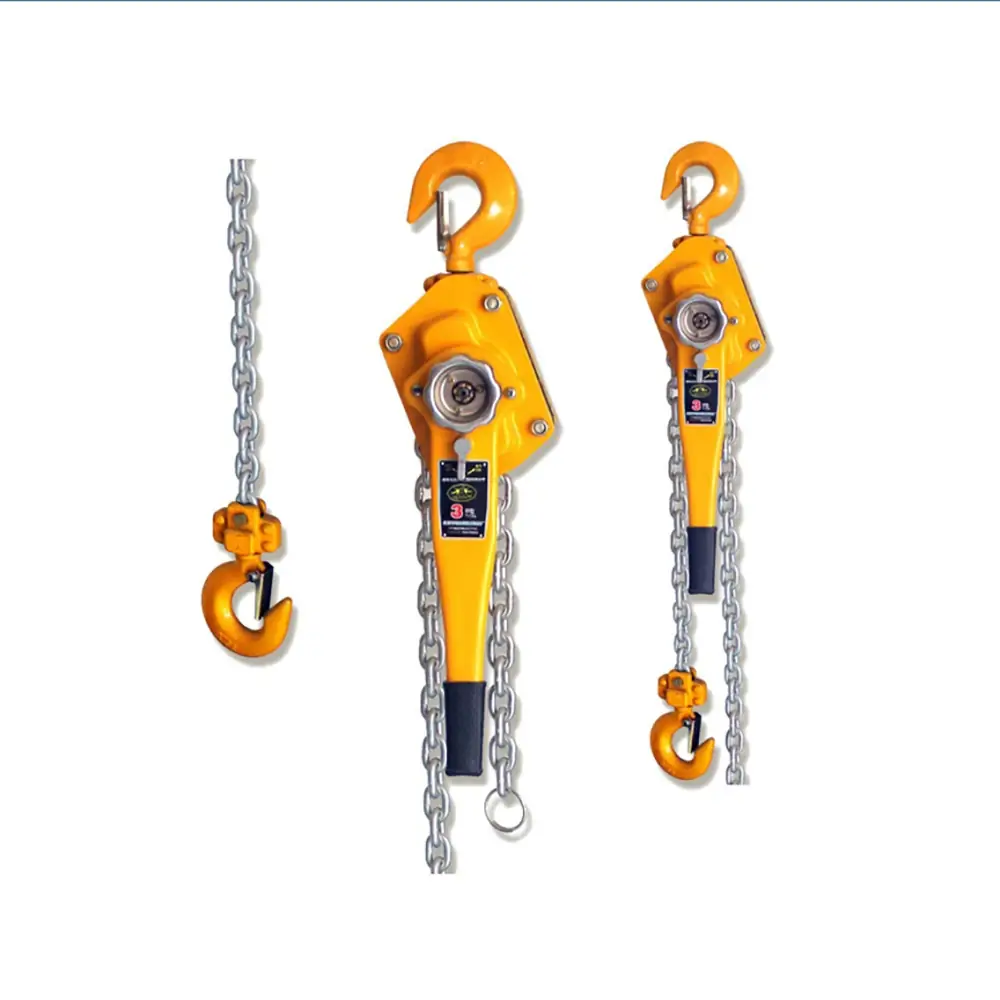
Manual Lever Operation for Controlled Movement
The lever mechanism converts handle movement into pulling force on the load chain. As the operator moves the handle, the chain moves through the hoist and transfers force to the load.
This design allows the operator to control the load through manual handle movement without relying on an electrical power source. It is suitable for lifting and pulling tasks that require direct manual control.
G80 Steel Chain for Load Handling
The G80 steel chain is one of the main load-bearing components of the hoist. It transfers the pulling force from the hoist to the connected load during operation.
The chain works together with the hoist body and hooks as part of the complete load-handling structure. This makes the chain specification an important product feature when buyers compare manual lever hoists.
Heavy-Duty Hooks for Secure Connection
The hooks connect the hoist to the supporting point or load. Their role is not simply to attach the hoist, but also to maintain the connection while lifting or pulling force is applied.
OTOY uses heavy-duty hooks as part of the product configuration, providing a practical connection solution for common lifting and pulling applications.
Industrial-Grade Steel Construction
The industrial-grade steel construction supports the main components of the hoist during operation. It provides the structural base for the lever mechanism, chain, and hooks to work together as a complete product.
This construction is designed for regular lifting and pulling work where a practical and durable structure is required.
Flexible Chain Length Options
The standard product provides a 10 ft lift height, while different chain lengths can be provided according to order requirements. This allows the chain configuration to be adjusted when the standard length does not match the intended working distance.
Color options can also be provided according to order requirements, giving buyers additional flexibility when specifying the product for different orders.
Overall, OTOY focuses on a straightforward manual lever hoist design. The lever mechanism, G80 steel chain, heavy-duty hooks, and industrial-grade steel construction work together to provide a practical solution for lifting and pulling applications.
Frequently Asked Questions
What Should Buyers Confirm Before Ordering an OTOY Manual Lever Hoist?
Buyers should confirm the required lift height, chain length, application, and any specific order requirements before placing an order. Product documents and other purchasing requirements can also be discussed with the supplier.
Can OTOY Manual Lever Hoists Be Used in Different Work Areas?
Yes. The product is suitable for common workplaces such as buildings, garages, and warehouses. Its manual design also allows it to be used without relying on an electrical power source.
Can OTOY Provide Different Chain Lengths for Manual Lever Hoists?
Yes. Different chain lengths and color options can be provided according to order requirements. Buyers should confirm the required configuration with OTOY before ordering.
What Is the Difference Between a Lever Hoist and a Chain Block?
A lever hoist is operated with a handle and can be used for lifting, pulling, and tensioning. A chain block is generally operated by pulling a hand chain and is mainly used for vertical lifting. The better choice depends on the working direction and application.
Can a Lever Hoist Be Used for Pulling as Well as Lifting?
Yes. A lever hoist can be used for both lifting and pulling when the product is suitable for the load and working conditions. Pulling applications may require different force from vertical lifting, so the working direction and load conditions should be considered.
Conclusion
Choosing the right lever hoist requires considering the application, product specifications, required documentation, and supplier capability, rather than focusing on price or capacity alone.
OTOY manual lever hoists offer a practical option for common lifting and pulling applications, with manual operation and configurations designed for different purchasing requirements.
If you are looking for a suitable lever hoist supplier, feel free to contact us for product options based on your application and purchasing requirements.