Key Takeaways
- Map pallet movement from receiving to dispatch to identify repeated handling and delays.
- Measure aisle width, turning space, floor conditions, and vehicle loading height before choosing equipment.
- Compare handling equipment by its actual task: horizontal transport, pallet stacking, or vehicle loading.
- Request written specifications, configuration details, delivery terms, and after-sales information before ordering.
Introduction
Warehouse delays often occur between tasks. Pallets may wait for storage space, travel unnecessarily between work areas, or remain at a dispatch point because suitable unloading equipment is unavailable. These problems can affect order preparation and delivery schedules.
An electric stacker forklift may help with pallet lifting and material handling when its configuration matches the task. However, it is not a universal replacement for pallet trucks or conventional forklifts. Buyers should first examine the workflow, measure the available space, and identify the required lifting and loading functions.
How Can Better Material-Handling Planning Improve Daily Warehouse Operations?
Start by mapping the movement of a typical pallet. This helps distinguish problems caused by poor layout from those caused by insufficient equipment.
Organize the Flow from Receiving to Dispatch
Map the route from receiving and inspection to storage, order staging, and dispatch. Record where pallets wait and how often workers move them between locations.
For example, if workers unload goods at one end of a warehouse but prepare orders at the other, relocating the staging area may reduce travel. If pallets wait because storage locations are unavailable, improving rack allocation may be more effective than buying faster equipment.
Record pallet movements, approximate travel distances, and waiting time during a normal shift. Use these observations to identify the main bottleneck before making changes.
Identify Repeated Lifting and Loading Tasks
Separate work into horizontal transport, vertical lifting, and vehicle loading. A pallet truck may suit floor-level movement, while a stacker may be more appropriate when pallets need to be raised into storage positions. Vehicle loading requires a separate compatibility check.
If workers repeatedly lift pallets to a particular rack height, confirm the required lift and the equipment’s rated capacity at that position. If most delays occur during long-distance transport, compare powered transport options instead.
Once the main task is clear, check whether the building can accommodate the equipment.
What Site Conditions Should Buyers Review Before Planning Material Handling?
A machine may suit the load but still fail to fit the route. Buyers should measure access points and loading areas before choosing a model.
Check Aisles, Turning Space, and Access Routes
Measure the narrowest aisle, doorway, and turning point. Include the pallet and cargo when checking clearance, since a load may extend beyond the forks.
Ask the supplier for overall dimensions and required operating clearance. If the route is tight, mark the equipment footprint on a floor plan and check whether it can approach, lift, turn, and leave without obstruction.
OSHA’s powered industrial truck workplace guidance provides useful reference points for reviewing workplace layout and operating conditions.
Review Floor Conditions and Loading Areas
Inspect floor joints, slopes, damaged surfaces, and changes in height between the warehouse and loading area. These conditions may affect movement and load stability.
For vehicle loading, measure the truck-bed height and the gap between the vehicle and platform. Confirm that the proposed equipment is designed for the intended loading method. Do not assume that a machine capable of lifting a pallet can also enter or load itself onto a delivery vehicle.
The UK Health and Safety Executive’s loading-area guidance discusses planning loading areas and controlling vehicle-related risks.
Plan Safe Movement Around People and Goods
Mark pedestrian routes, equipment paths, and temporary pallet storage areas. Keep goods away from blind corners and walkways. Where people and equipment must cross paths, establish clear crossing points and workplace rules.
OSHA’s operator training guidance highlights the need for training that reflects the equipment and workplace conditions. Businesses should also follow the regulations applicable in their location.
With site conditions documented, buyers can compare equipment by its intended task.
How Should Businesses Compare Material-Handling Equipment and Prepare for Purchasing?
The goal is to select equipment that completes the required work without adding unnecessary handling steps.
Compare Equipment Types by Their Intended Tasks
| Equipment type | Typical task | Main point to check |
| Manual pallet truck | Short-distance pallet movement | Operator effort and floor condition |
| Electric pallet truck | Powered horizontal transport | Travel frequency and battery requirements |
| Electric stacker | Pallet lifting and stacking | Lift height, load capacity, and aisle space |
| Conventional forklift | Broader lifting and transport duties | Access, clearance, and site requirements |
An electric forklift stacker should be assessed by its actual design rather than its name. Suppliers may use similar terms for different equipment, so confirm whether the model supports horizontal travel, powered lifting, stacking, or a specialized loading function.
Use a simple rule: compare pallet trucks when the task is mainly horizontal movement; examine stackers when pallets need lifting; and consider conventional forklifts when the work requires broader lifting and transport capabilities.
Confirm Specifications and Supply Conditions
Request a specification sheet listing rated capacity, lifting height, fork dimensions, overall dimensions, power source, battery, and charging requirements. For elevated loads, ask for capacity data at the required lifting position rather than relying only on the maximum rated load.
Confirm which accessories are standard and which cost extra. Check warranty terms, spare-parts availability, delivery time, and technical support. If the equipment must work with a vehicle or special platform, request written confirmation of compatibility.
Prepare an RFQ That Supports Accurate Quotations
Include cargo weight, pallet dimensions, required lifting height, aisle measurements, floor conditions, operating frequency, and delivery arrangements. For vehicle-loading applications, provide the vehicle type, bed height, available storage space, and unloading method.
Ask suppliers to list the model, configuration, included accessories, price, lead time, warranty, and after-sales support. This makes quotations easier to compare and helps expose missing components before ordering.
Why Choose OTOY’s Electric Stacker Forklift for Selected Warehouse and Delivery Tasks?
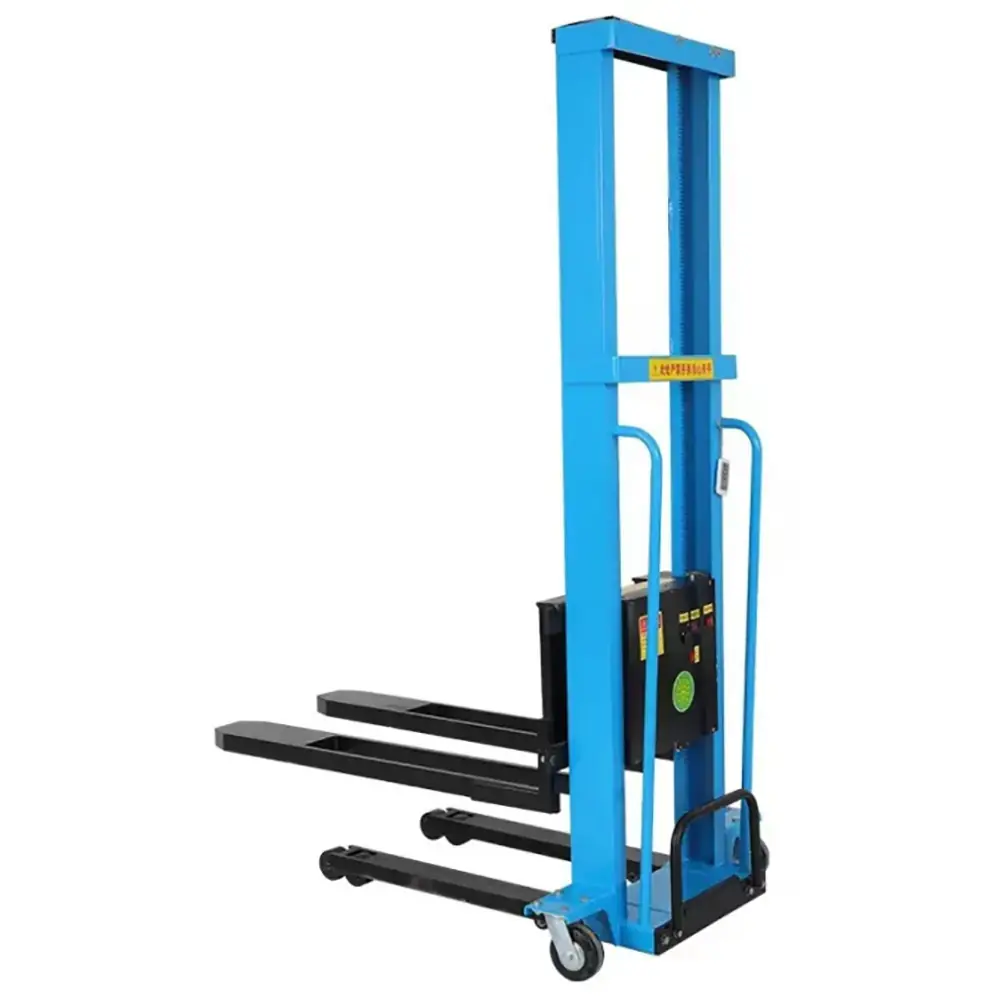
Once the operational requirements are established, buyers can evaluate a specific model against those requirements. OTOY supplies material-handling equipment, including lifting tools and warehouse equipment. The company describes its business as drawing on more than 20 years of experience and serving customers in over 80 countries, with TÜV-certified equipment within its offering.
Product Information at a Glance
| Item | Published information |
| Product type | Mini forklift |
| Rated capacity | 1 ton |
| Lifting-height options | 1.3 m and 1.6 m |
| Intended applications | Warehouse lifting and logistics operations |
| Design description | Self-climbing and truck-mounted |
| Fork design | Reinforced forks, as described in the product information |
Check Whether the Compact Design Fits the Work Area
A compact machine can be useful in smaller warehouses, backroom storage areas, and delivery operations where a larger forklift may be difficult to accommodate. However, compact size alone does not guarantee that a machine can turn or operate within a particular aisle.
Before selecting this stacker forklift, measure the narrowest access point and the turning area with a pallet in place. Provide these measurements to OTOY and request the relevant equipment dimensions. This helps establish whether the machine can reach the work area without obstructing other warehouse activities.
Match Capacity and Lifting Height to the Pallet
The published rated capacity is 1 ton, with lifting-height options of 1.3 m and 1.6 m. These figures provide an initial reference, but they should be compared with the actual weight, dimensions, and placement of the load.
For instance, buyers handling different pallet sizes should confirm that the forks can support the pallet correctly and that the required lifting height is suitable for the intended task. Ask OTOY to verify the applicable capacity under the required operating conditions instead of assuming the headline rating applies to every load position.
Confirm the Self-Loading Method for Delivery Work
The product is described as self-climbing and truck-mounted, which may make it relevant to selected delivery workflows. However, these terms do not by themselves explain exactly how the machine is loaded, secured, deployed, or removed from a vehicle.
Before purchasing a self loading stacker, provide the supplier with the delivery vehicle type, bed height, available space, and expected loading procedure. Confirm vehicle compatibility, any mounting or securing arrangements, and whether additional components or accessories are required. Written confirmation is especially important when the machine will be transported regularly between delivery locations.
Verify Fork Compatibility with the Cargo
Fork dimensions and spacing affect how a machine handles different pallet types. A fork arrangement suitable for one pallet may not support another pallet or load in the same way.
Provide the supplier with pallet dimensions, fork-entry direction, and details of any unusual load shape. For non-standard goods, include photographs or drawings. Confirm the fork length, width, spacing, and relevant operating limits before finalizing the order.
Review OTOY’s Product and Purchasing Support
The equipment itself is only one part of the purchasing decision. Buyers also need clear product documentation and a reliable process for confirming the final configuration.
OTOY’s experience in material-handling equipment and its international customer base provide a basis for discussing application requirements and supply arrangements. Before ordering, ask for the complete technical data sheet, a written list of included accessories, delivery terms, warranty conditions, spare-parts arrangements, and maintenance guidance.
When the equipment will be used for vehicle loading, request specific instructions for mounting, securing, transport, and deployment. These details help the purchasing team evaluate the full operating arrangement rather than comparing machines by price alone.
Frequently Asked Questions About Electric Stacker Forklifts
What is the rated capacity of the featured OTOY mini forklift?
The published rated capacity is 1 ton. Buyers should still confirm the permitted load under their required lifting conditions and provide the supplier with the load’s dimensions and weight distribution.
Which lifting heights are available for this model?
The product information lists 1.3 m and 1.6 m lifting-height options. Confirm which version is quoted and whether its lifting height suits the intended storage or handling position.
Can this mini forklift load itself onto a delivery vehicle?
The product is described as self-climbing and truck-mounted, but the exact loading method and vehicle requirements should be confirmed with OTOY. Ask how the machine is positioned, secured, transported, and deployed, and whether extra equipment is required.
When is a stacker more suitable than a pallet truck?
A pallet truck is generally intended for moving pallets horizontally over suitable floors. A stacker is more appropriate when goods must also be lifted to a defined height for stacking or handling. The decision depends on the actual task, load, and site layout.
What should buyers include in an RFQ for warehouse lifting equipment?
Include the load weight and dimensions, pallet type, required lifting height, aisle measurements, floor conditions, operating frequency, and delivery requirements. Request a written specification, final configuration, delivery terms, warranty details, and after-sales support information.
Conclusion
A mini forklift gives businesses another option for handling palletized goods when a full-size forklift may be more equipment than the job requires. Its role is particularly relevant to smaller warehouse operations and delivery businesses that handle routine lifting tasks but do not need the capacity or versatility of a larger industrial truck for every movement. The self-climbing, truck-mounted design described for OTOY’s model also makes it worth considering for delivery setups where equipment transport is part of the daily workflow.
If you are looking for a reliable electric stacker forklift supplier, contact OTOY for available models, technical specifications, and a quotation based on your load requirements, lifting needs, and warehouse or delivery application.