Key Takeaways
- Choose a capacity that covers your maximum expected load and confirm that the crane and lifting accessories are rated for the same working load.
- Compare division and accuracy against the purpose of weighing, rather than assuming a higher capacity gives better readings.
- Choose display and control features according to where the operator stands during lifting.
- Match environmental protection to actual exposure to dust, water, and temperature changes.
- For commercial weighing, confirm the required metrology approval before placing the order.
Introduction
Choosing the right crane scale starts with two questions: how heavy is the load, and what will the weight reading be used for? The capacity must cover the heaviest expected load, while division and accuracy need to match the required weighing result.
The lifting arrangement and working environment also affect the choice. Display visibility matters when the operator stands away from the suspended load, while remote control can make operation easier when the scale is out of reach.
Choose the Right Capacity for Your Loads
Start with the actual load range, then use the maximum expected load to set the minimum scale capacity.
Match Capacity to the Working Load
Record the typical load and the heaviest load that needs to be weighed.
For example, loads ranging from 2 to 4.5 tons require a crane scale 5 ton model rather than a 3-ton scale. The scale capacity must cover the maximum expected load without exceeding its rated limit.
The complete lifting arrangement also needs to support the target load. The crane, hook, sling, shackle, and scale must have sufficient rated capacity, with the lowest-rated component setting the practical limit.
Check Typical and Maximum Load
Use these three figures when comparing a quotation:
- Typical load: the weight handled most often
- Maximum working load: the heaviest load you expect to weigh
- Lifting capacity: the rated capacity of the crane and connecting accessories
Set the minimum scale capacity from the maximum expected load, then check the rated capacity of the complete lifting arrangement.
Daily loads that remain well below the scale’s maximum capacity require another check: division and accuracy. A larger capacity does not automatically provide a more useful weight reading.
Compare Weighing Performance
After capacity, focus on the specifications that determine how the displayed weight can be used.
Understand Capacity, Division, and Accuracy
Capacity, division, and accuracy answer three different questions:
- Capacity: What is the maximum load?
- Division: What is the smallest weight change shown?
- Accuracy: How close is the displayed result to the actual weight?
Use capacity to confirm that the scale can handle the load. Use division to judge how finely the weight is displayed. Use accuracy to determine whether the result is suitable for the intended application.
For routine load checks, stable and readable weight information may be sufficient. Inventory and shipping records require closer attention to the manufacturer’s stated division and accuracy.
Define the Required Weighing Accuracy
The required accuracy depends on how the weight will be used.
Routine material handling mainly requires reliable readings for load checks. Inventory and shipping records require a closer comparison between the stated accuracy, division, and the precision needed for those records.
Commercial transactions have additional legal metrology requirements. OIML provides an international framework for legal metrology and regulated measuring instruments.
When weight determines a selling price, payment, or another commercial amount, ask the supplier for the approval or compliance documents required in the destination market before ordering.
Check Display Visibility During Operation
The display should remain readable from the operator’s normal working position.
An operator standing several meters from the suspended load needs a display that can be read at that distance. Poor lighting also makes display visibility a practical selection factor.
Remote control is useful when the operator needs to control the scale without approaching the suspended unit. The normal operating position should determine whether this feature is necessary.
Consider the Working Environment and Lifting Method
The site conditions and lifting arrangement determine which additional specifications matter for the application.
Assess the Operating Environment
Check the scale’s environmental specifications against the actual installation site.
A dry, clean indoor warehouse may need less environmental protection than an outdoor loading area or a dusty workshop. Check the manufacturer’s stated operating range for temperature, water exposure, and other site conditions before ordering.
Use the manufacturer’s operating range and limitations to make the decision rather than relying on the product name or general descriptions.
Match the Scale to the Lifting Arrangement
Check the rated capacity of the complete lifting arrangement before ordering.
Capacity is only one part of the check. The scale also needs to match the crane and the accessories used to connect the load.
Connection compatibility needs to be confirmed before purchase. A suitable capacity is not enough when the scale cannot be correctly connected to the lifting equipment.
Loads that move or swing during lifting are harder to weigh consistently. Keep the suspended load as stable as practical while taking the reading.
Consider Remote Operation and Wireless Functions
Remote operation is useful when the scale is outside the operator’s convenient reach.
A scale suspended above the working area can be controlled from a suitable position with a remote controller. This reduces the need to approach the suspended unit during normal operation.
When comparing a wireless crane scale, check what “wireless” actually refers to in the specification. It may describe wireless communication or data transmission, while a remote controller refers to remote operation. Do not assume that a wireless configuration automatically includes a remote controller. Check the quoted configuration.
Evaluate the Crane Scale Supplier
The supplier should be able to match the proposed configuration with the load, lifting arrangement, working environment, and weighing purpose.
Clear product information also makes it easier to verify whether the quoted configuration matches your requirements.
Check Application Support
Give the supplier four basic details: load range, lifting arrangement, working environment, and weighing purpose.
Ask the supplier to confirm the proposed capacity, connection method, operating configuration, and required approvals. When these points are not explained, request technical clarification before placing the order.
Review After-Sales Support
Check the documentation and support available before ordering.
Ask for operating instructions, available spare parts, technical support arrangements, and required compliance documents.
For commercial weighing applications, check the legal requirements of the destination market before placing the order. For example, the UK government regulates non-automatic weighing instruments used for commercial transactions and certain payment-related purposes under the Non-Automatic Weighing Instruments Regulations 2016 in Great Britain.
Why Choose OTOY for Your Crane Scale Needs?
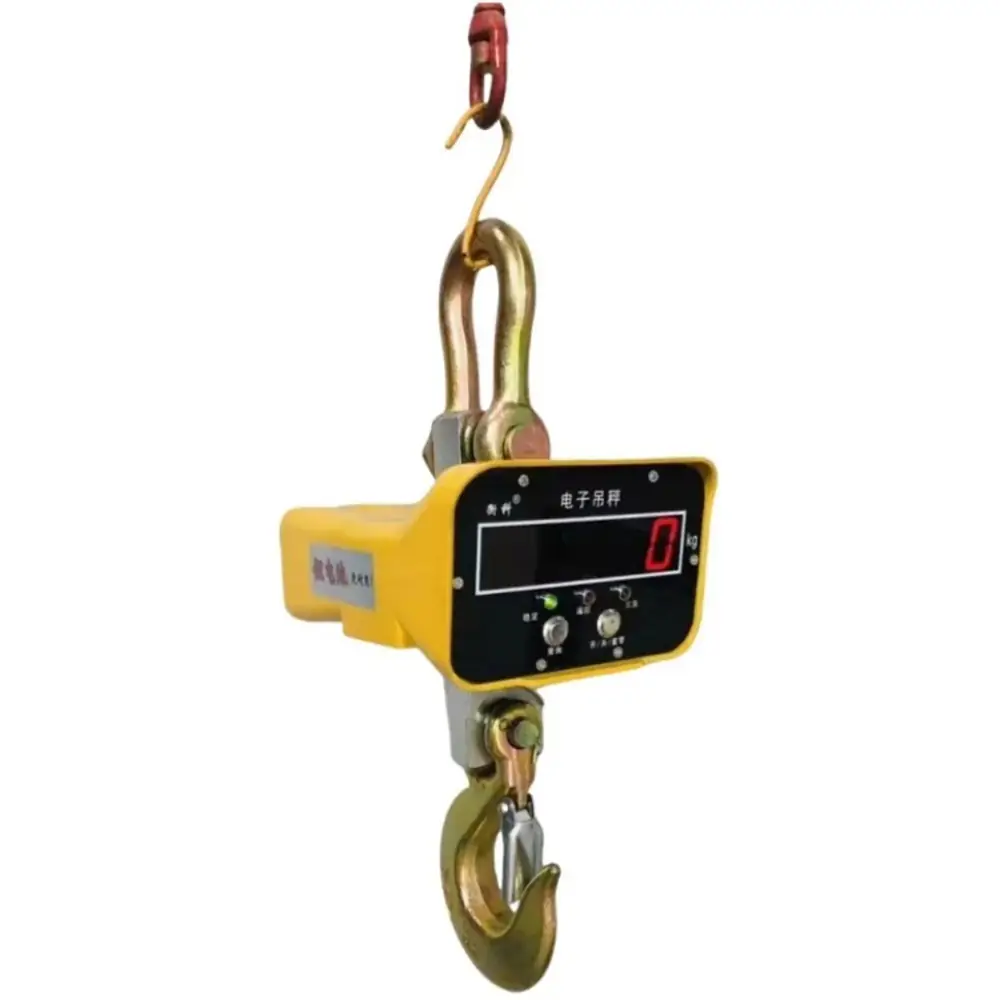
The selection criteria above provide a practical basis for comparing crane scales. The OTOY 5,000 kg crane weight scale combines a suitable capacity, digital display, and remote control for heavy-load weighing during lifting operations.
5000 kg Digital Crane Scale
| Feature | Product Information |
| Capacity | 5,000 kg |
| Display | 1.3-inch LCD |
| Control | Remote controller |
The 5,000 kg capacity provides sufficient weighing range for heavy-load applications. The LCD provides a direct digital weight reading, while the remote controller allows the operator to control the scale without approaching the suspended unit.
Clear Digital Reading for On-Site Weighing
The 1.3-inch LCD makes the weight reading easy to check during lifting operations.
The operator can check the weight while the load remains suspended instead of moving it to a separate floor scale. This keeps the weighing step within the existing lifting process.
Remote Control for Suspended Loads
The remote controller solves a practical problem in overhead weighing: the scale may not be within convenient reach.
The operator can control the unit from a suitable position while the scale remains suspended above the working area. This reduces the need to repeatedly approach the equipment during weighing operations.
Easy Integration Into Lifting Operations
The scale can be used within the existing lifting process, allowing operators to check the load without moving it to a separate weighing point.
The operator can complete the weighing step while the load is already suspended, without adding a separate weighing stage.
Frequently Asked Questions
Can the OTOY 5,000 kg Crane Scale Weigh Loads While They Are Suspended?
Yes. A crane scale measures the load while it is suspended from the lifting arrangement. The 5,000 kg model is intended for loads within its rated capacity, while the complete lifting arrangement must also be suitable for the load.
What Does the 1.3-Inch LCD Display Show?
The 1.3-inch LCD displays the digital weight reading. For inventory, shipping, or other records requiring defined measurement precision, also check the specified division and accuracy.
Does the Remote Controller Come With the 5,000 kg Model?
The listed OTOY configuration includes a remote controller. For wholesale orders, confirm the exact configuration in the quotation before placing the order.
What Should Be Confirmed Before Ordering the 5,000 kg Crane Scale?
Confirm the required capacity, lifting arrangement, connection method, control configuration, and any certification needed for the application. For wholesale orders, ask the supplier to include the confirmed configuration in the quotation before placing the order.
Can the Crane Scale Be Used for Commercial Weighing?
Commercial use depends on the legal metrology requirements of the destination market and the approval status of the specific model. Confirm the required certification with the supplier before purchasing when the weight is used to determine a selling price, payment, or other commercial amount.
Conclusion
A useful crane weighing solution should fit into the existing lifting workflow rather than create extra handling steps. A clear display keeps the weight reading available at the worksite, while remote control makes operation easier when the scale is suspended above the normal working position.
OTOY’s 5,000 kg digital crane scale brings weighing and lifting closer together by allowing the load to be checked while suspended, with the weight shown directly on the LCD and operation handled through a remote controller.
If you are looking for a reliable crane scale supplier, feel free to contact OTOY for product options, specifications, and quotations based on your application and purchasing requirements.