Choosing the right forklift is an important decision for businesses that handle materials, pallets, and goods on a regular basis. For warehouse operators, the right equipment should match the required load capacity, lifting height, available space, operating conditions, and safety requirements.
A 1 ton electric forklift can be considered when lifting and stacking requirements are within a 1-ton capacity and an electrically powered solution is preferred. However, choosing between different configurations requires more than simply looking at the maximum load capacity. This guide explains the main factors businesses should consider when selecting a 1 ton electric forklift and how different specifications can affect warehouse operations.
What Is a 1 Ton Electric Forklift?
A 1 ton electric forklift is compact material handling equipment designed to lift and handle loads of up to 1 ton. Unlike equipment primarily intended for horizontal pallet movement, it provides lifting capability for stacking and handling goods at different heights.
Electric power also makes this type of equipment different from fuel-powered lifting equipment, particularly in terms of emissions, noise, and operating costs. Depending on the warehouse layout and material handling requirements, an electric stacker can be used for lifting and stacking tasks where its rated capacity and lifting height are appropriate.
What Factors Should You Consider When Choosing a 1 Ton Electric Forklift?
Load Capacity
Load capacity should be the starting point when selecting lifting equipment. A 1 ton forklift is designed for loads within a rated capacity of 1 ton. Buyers should consider the typical weight of the goods that need to be lifted and avoid selecting equipment based only on occasional maximum loads.
Lift Height
The required lift height depends on how goods are stored and stacked. A warehouse with lower storage requirements may not need the same lifting height as an operation that regularly places goods at higher levels. Choosing a higher lift height than necessary may also mean that the overall equipment dimensions need additional consideration.
For this reason, buyers should determine the actual lifting height required before comparing different forklift configurations.
Overall Vehicle Height
Lift height and vehicle height are two different specifications and should not be confused. A forklift may have a certain maximum lifting height while also having a specific overall vehicle height. The latter is particularly important when the equipment needs to operate in areas with height restrictions.
Before purchasing, buyers should check doors, passageways, working areas, and other relevant height limitations to make sure the selected equipment can operate within the available space.
Warehouse Space and Maneuverability
The physical layout of a warehouse can have a direct impact on equipment selection. Buyers should consider the available operating space, storage arrangement, and areas where lifting and stacking will take place.
A compact forklift can be useful where flexible operation is important. This is one reason businesses may compare a compact electric forklift with larger material handling equipment when working in more confined warehouse environments.
Safety Features
Safety should be considered alongside capacity and performance. Buyers should look for appropriate safety features such as emergency braking and speed control. Stable operation and suitable load-bearing components are also important when handling goods.
The equipment should always be operated within its rated capacity and according to the requirements of the working environment.
Operating Costs and Power Source
The power source can have a significant effect on day-to-day operating costs. Electric lifting equipment can reduce operating costs because electricity can be less expensive than fuel for routine operation.
Electric equipment also produces zero exhaust emissions during operation and generally operates with lower noise. For businesses handling goods indoors or in environments where noise and emissions are important considerations, these characteristics can be valuable when comparing different material handling solutions.
Electric Forklift vs. Other Warehouse Material Handling Equipment
Different types of material handling equipment are designed for different tasks. Understanding these differences can help buyers avoid selecting equipment that does not match their actual requirements.
Electric Forklift vs. Pallet Truck
A pallet truck is commonly associated with moving pallets and goods horizontally over relatively short distances. An electric forklift, by comparison, provides lifting capability for stacking goods.
For example, a warehouse pallet truck may be suitable when the primary requirement is moving pallets, while a forklift is more appropriate when goods also need to be lifted and stacked. Businesses should therefore identify whether their main requirement is horizontal transportation, lifting, or a combination of both.
Electric Forklift vs. Manual Stacker
A manual stacker relies on manual operation for lifting and handling, while an electric solution uses electric power. For businesses that regularly perform lifting and stacking tasks, an electric pallet stacker can reduce the physical effort involved in operation and provide an electrically powered alternative to manual equipment.
The appropriate choice depends on the workload, operating environment, and specific material handling requirements.
Where Can a 1 Ton Electric Forklift Be Used?
Factory Warehouses
Factory warehouses often require equipment for lifting, stacking, and moving materials. An electric stacker forklift can be considered for suitable handling tasks within its rated load capacity.
Logistics and Distribution Centers
Logistics operations frequently involve moving and stacking goods. A forklift can provide lifting capability for suitable loads while offering electrically powered operation.
Retail and Shopping Facilities
Large shopping malls and retail facilities may require compact equipment for handling goods. Low noise and zero exhaust emissions can be useful characteristics in environments where these factors matter.
Port Terminals
Port terminals can also involve material handling and lifting operations. Before selecting equipment for this type of application, buyers should verify that the load, lifting, and operating conditions match the equipment’s specifications.
OTOY 1 Ton Electric Forklift: Available Configurations and Features
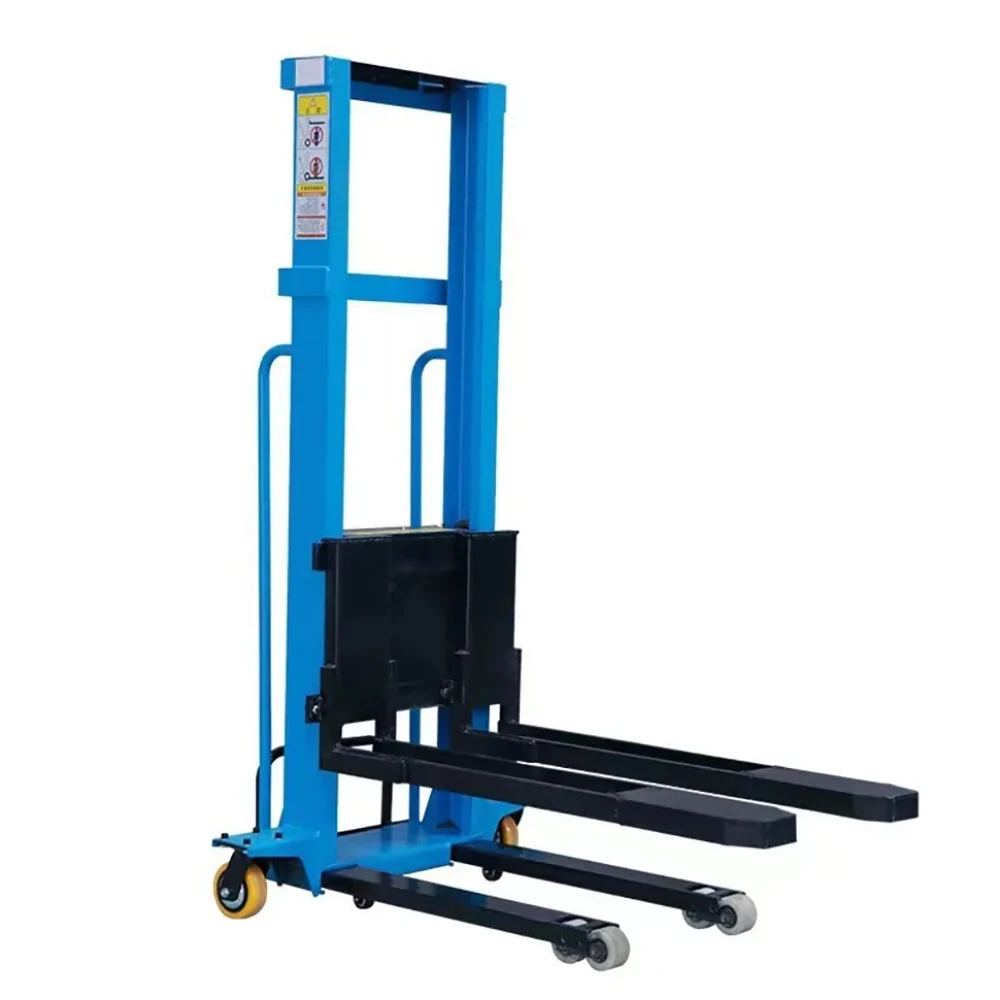
OTOY’s 1 ton electric forklift can be used for various material handling tasks in warehouses, logistics operations, and other working environments. It can be transported with the vehicle, allowing operators to carry the lifting equipment directly to different job sites for flexible loading, unloading, and material handling. To meet different lifting requirements, OTOY offers two lift-height configurations.
1.3m Lift Height Model
The 1.3m model has a 1-ton load capacity and a 1.3m lifting height. Its overall vehicle height is 1.83m. This configuration can be considered when a 1.3m lifting height meets the warehouse’s stacking requirements and the overall vehicle height is suitable for the operating environment.
1.6m Lift Height Model
The 1.6m model also has a 1-ton load capacity, while providing a 1.6m lifting height. Its overall vehicle height is 2.13m. This option can be considered when a higher lifting height is required. Buyers should also make sure that the 2.13m vehicle height is compatible with the available working space.
Reinforced Forks and Stable Load Handling
The OTOY forklift uses reinforced forks designed for strong load-bearing capability. The product is also designed for stable operation during lifting and material handling tasks. These features are relevant when businesses need equipment for routine handling within the specified 1-ton capacity.
Safety and Electric Operation
The product includes an emergency braking system and speed limiter as part of its safety features. Its electric power system provides zero exhaust emissions and low-noise operation, while electric operation can help reduce operating costs compared with fuel-powered equipment.
A Practical Checklist for Choosing a 1 Ton Electric Forklift
Before placing an order, B2B buyers can review the following points:
- Confirm the required load capacity and make sure it is within the equipment’s rated capacity.
- Determine the required lifting height based on actual stacking requirements.
- Check overall vehicle height against available doors, passages, and working areas.
- Evaluate warehouse space to determine whether a compact forklift is appropriate.
- Review safety features, including emergency braking and speed control.
- Compare operating costs and power sources when evaluating long-term use.
- Match the equipment to the actual application, whether the main requirement is lifting, stacking, or material handling.
Conclusion
Choosing a 1 ton electric forklift should be based on the complete requirements of the warehouse rather than a single specification. Load capacity, lifting height, overall vehicle height, available space, safety, and operating costs all play a role in selecting suitable equipment.
For businesses that need lifting and stacking capability within a 1-ton capacity, an electric forklift can provide a compact and electrically powered material handling option. OTOY’s model offers 1.3m and 1.6m lift-height configurations, with vehicle heights of 1.83m and 2.13m respectively, along with reinforced forks, stable operation, emergency braking, and a speed limiter.
By comparing these specifications with actual warehouse requirements, buyers can make a more informed decision and select a configuration that fits their material handling needs.
Contact OTOY to discuss your warehouse lifting requirements and explore a suitable 1 ton electric forklift configuration for your application.
FAQ
1. What is the load capacity of the OTOY electric forklift?
The OTOY electric forklift has a 1-ton load capacity for suitable warehouse lifting and stacking applications.
2. What lift heights are available?
The forklift is available with 1.3m and 1.6m lift heights. The corresponding vehicle heights are 1.83m and 2.13m respectively.
3. What safety features does the forklift have?
The forklift is equipped with an emergency braking system and speed limiter. It also features reinforced forks and stable operation for suitable material handling tasks.